The Agra issue
Taking Children Around Agra Without the Meltdown
Two days in Agra, planned around opening hours, shade and the one booking you have to make days ahead. Sunrise at the Taj, ramps at the fort, sloth bears at Keetham.

By Matteo FerraroAgra is a Mughal city, not a single monument
Agra's Mughal set pieces sit within a few kilometres of each other along one bend of the Yamuna, which makes the city look manageable on a map and feel relentless once you are standing in it. Marble throws heat back at you by ten in the morning, security queues split families apart at the scanner, and the walk from ticket gate to monument is always longer than a child has budgeted for. Get the order and the opening hours right and two days here work with young children; get them wrong and you spend the afternoon carrying somebody who was fine an hour ago.
Start the first day before the sun does
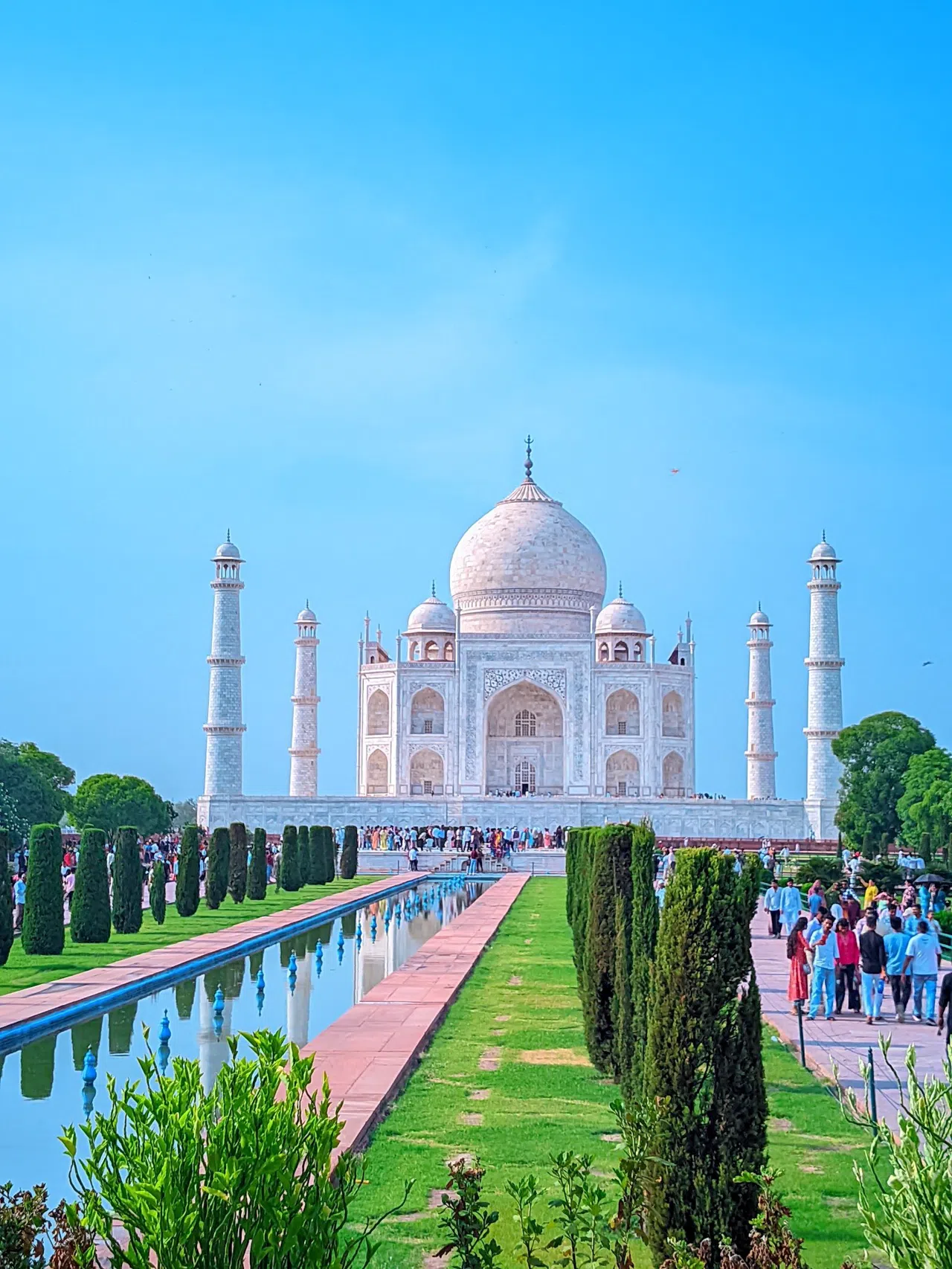
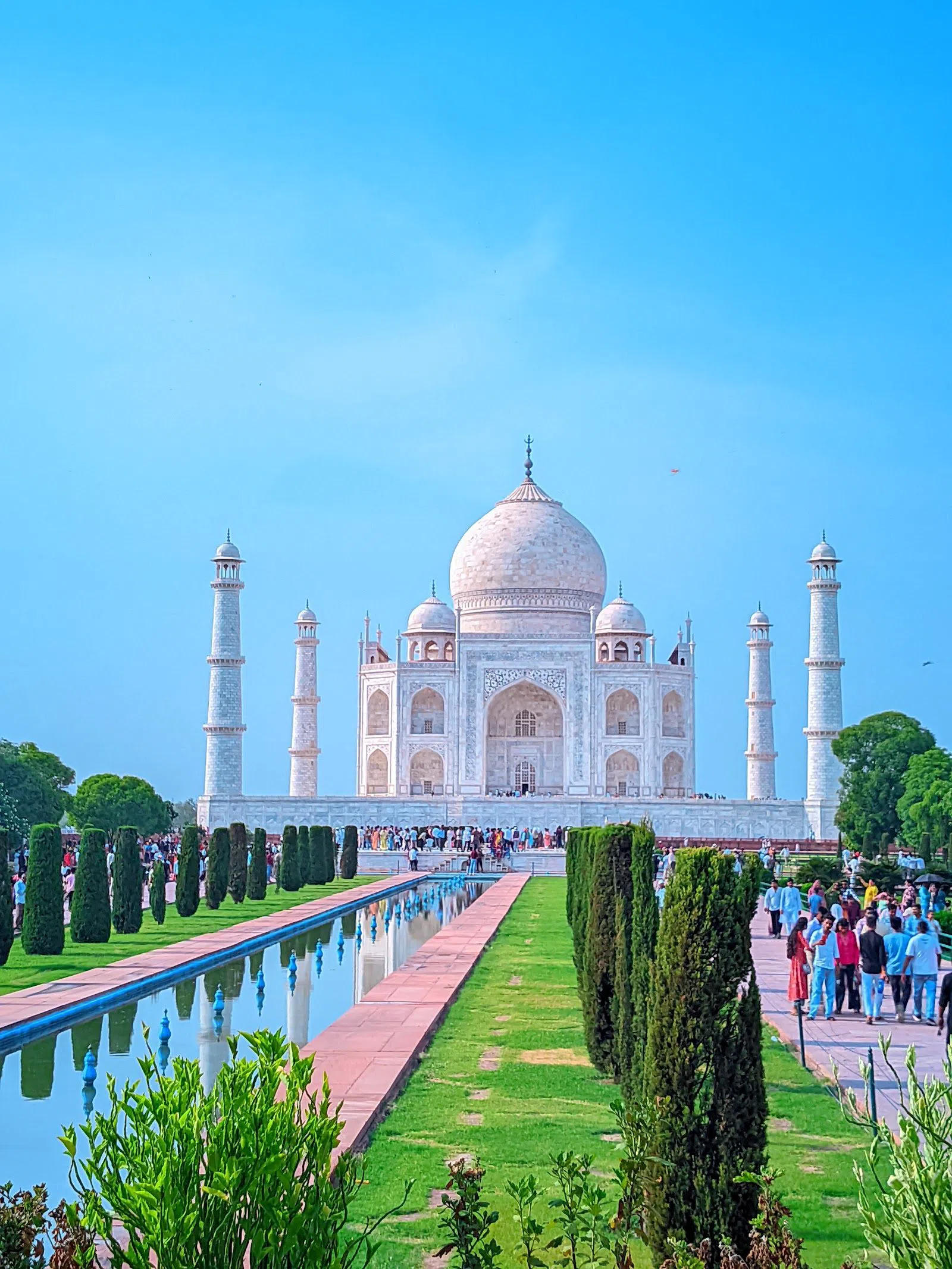
The Taj Mahal (Tajganj, on the south bank) opens thirty minutes before sunrise and closes every Friday, and with children those two facts decide the shape of the whole trip. The sunrise slot is both the coolest hour and the least crowded one, which matters more with a four-year-old than any photograph does. By nine the forecourt is full, the queue for the mausoleum has doubled back on itself, and the marble is warm underfoot even through the shoe covers you are handed at the plinth.

Tickets at 2026 ASI rates are ₹1,100 for a foreign adult plus a ₹200 supplement to go inside the mausoleum, and ₹50 plus the same ₹200 supplement for Indian nationals. Under-15s enter free, but free is not the same as ticketless: each child needs a ticket issued in their name. Book online the evening before with every name on the reservation, including the baby, and you skip the counter entirely.
The part worth briefing children on is security. Queues are split by nationality and again by gender, so a family of four is routinely separated for two minutes at the scanner and reassembles on the other side. Say so before you join the line and agree where you will meet; a two-minute separation that nobody warned them about is the first wobble of the day. Inside, the mausoleum chamber is dark, single-file and slow-moving. With a toddler in arms you lose very little by staying in the gardens and skipping the supplement.
Plan on being back out by half past eight, eating breakfast properly, and doing nothing until mid-afternoon. That gap is not wasted time; it is what holds the second half of the day together.
Plan your Agra trip
Live prices from our booking partners.
Free cancellation on many rooms. We may earn a commission when you book.
A fort that reads as a castle
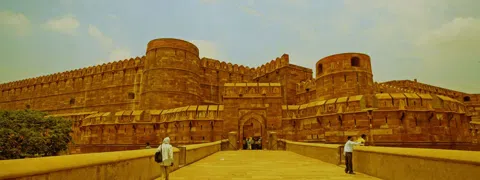
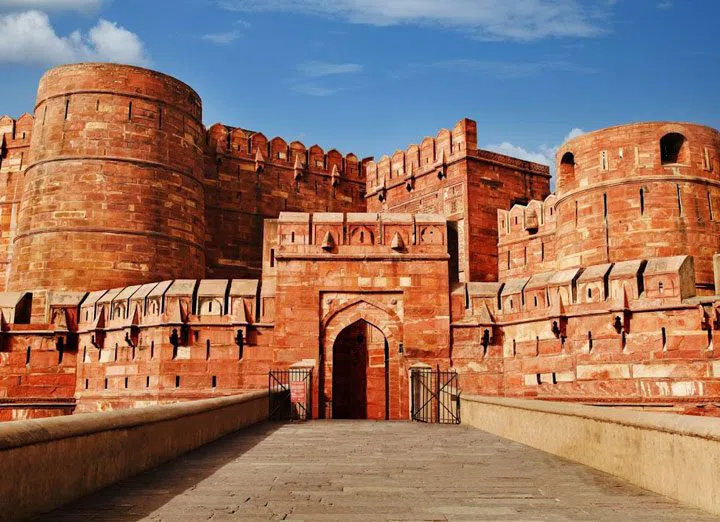
Agra Fort (Rakabganj, about two and a half kilometres upriver) is the easiest of the big monuments to do with small children, and the reason is dull and practical: the main approach is a long ramp rather than stairs, so a pushchair goes up it without anyone lifting anything. Entry is ₹650 for a foreign adult and ₹50 for Indian nationals, under-15s free, open daily from sunrise to sunset.
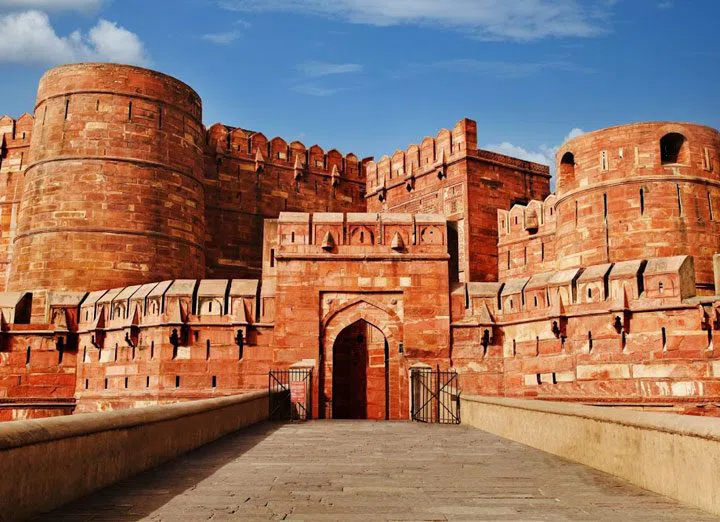
What sells it to a child is the shape rather than the architecture. Ramparts, gates, a moat line, walls you look down from: a fort reads as a castle in a way that a tomb never will, and children who were polite about the Taj at dawn tend to actually run here. From the marble balconies on the river side you get the Taj again at a distance, which gives the adults a second look at the main event without a second ticket queue.
Allow ninety minutes to two hours. There is shade in the palace courtyards, which the Taj forecourt does not really offer.
Twenty-five minutes at the Baby Taj
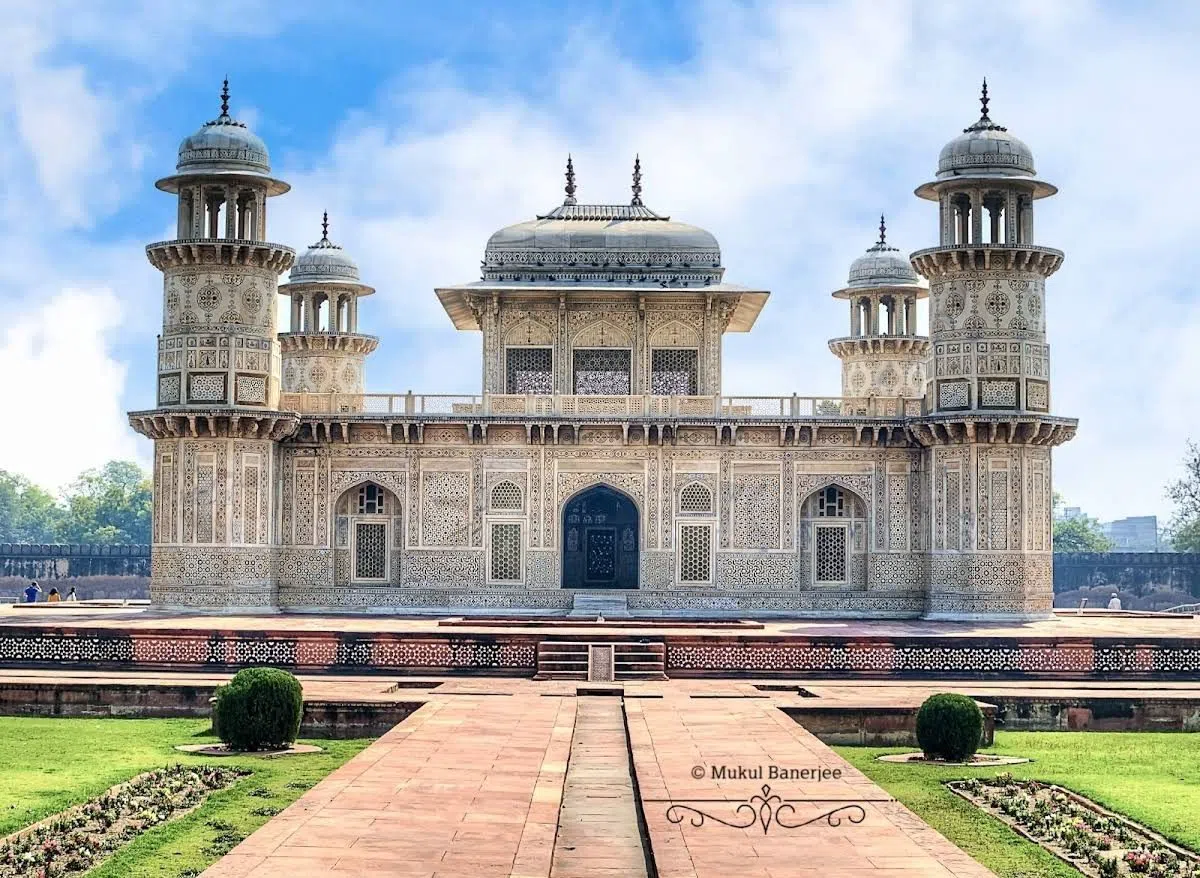
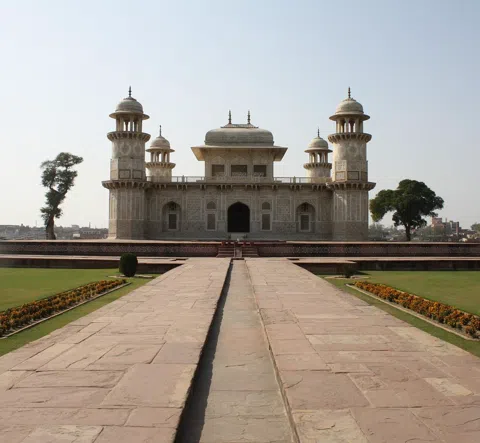
The Tomb of I'timad-ud-Daulah (Moti Bagh, on the east bank) is the short, low-stakes monument you slot between two long ones. Twenty-five minutes is genuinely enough, and that is the point. It is ₹310 for a foreign adult, ₹30 for Indian nationals, under-15s free, open roughly 6am to 6pm.
It is small enough that you can see the whole family from anywhere in it, and it is rarely busy enough for crowding to be a problem even when a coach pulls up. The inlay work runs low on the walls, close enough to eye level that a seven-year-old can look at the patterns instead of being told to look up at them. If your children have asked what all the flowers in the stone are, this is where they can see them at arm's length.
Where children are allowed to run
Mehtab Bagh (across the river, north of Kachhpura) is where an Agra itinerary lets up. Same Taj, directly opposite across the water, but no crowd, no shoe covers, nothing breakable and large open lawns where children can run rather than be shushed. Entry is ₹300 foreign, ₹25 Indian, under-15s free, open sunrise to sunset. There is very little shade in the garden itself, so bring water and come in the last hour and a half of light, which is when the view is worth having anyway.
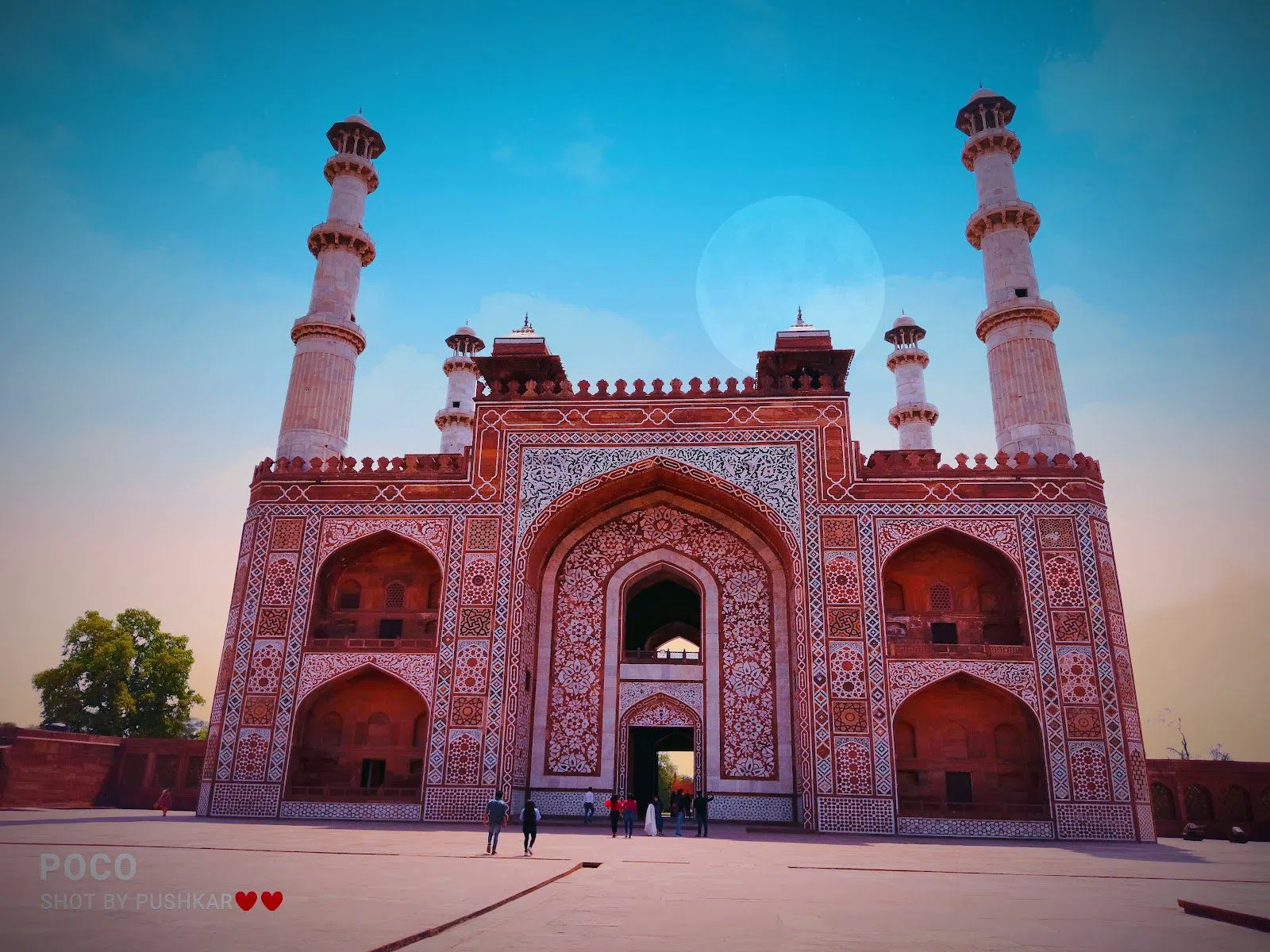
Akbar's Tomb, Sikandra (nine kilometres north of the centre on the highway) is the best-value stop in the city for families and the one that behaves least like sightseeing. Inside the walled Mughal garden there are free-roaming deer, peacocks and langurs, and the grounds are big enough that even a full coach disperses within minutes. Entry is ₹250 foreign, ₹20 Indian, under-15s free, open roughly 6am to 6pm. Keep food out of sight and out of hands, because the monkeys are opportunists and will take a packet of biscuits off a child without hesitating. Because it sits north of town, it works well as the last stop on a departure morning if you are driving on.
The bears you have to book days ahead
The Wildlife SOS Agra Bear Rescue Facility (Keetham, out past the lake) is the stop children talk about weeks later. It is the largest sloth bear rescue centre in the world, and the visit is a guided one, one and a half to two hours, walking between enclosures with someone who knows the individual animals.
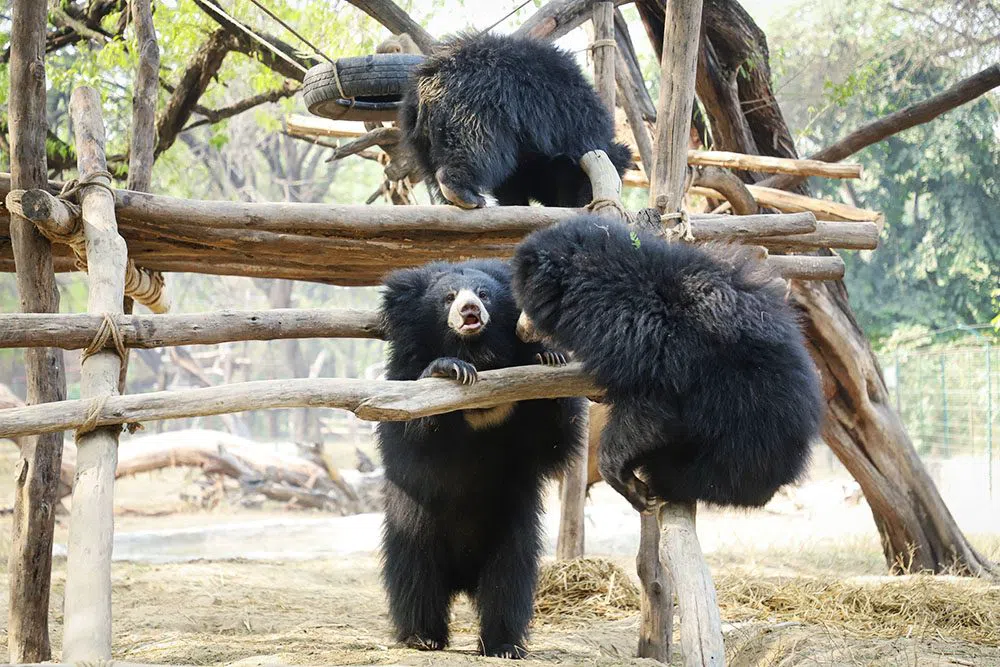
The door policy is strict and non-negotiable: pre-booked slots only, by email or phone, with just three or four guided slots a day. Walk-ups are turned away, and turning a carload of tired children around at a gate twenty kilometres from your hotel is exactly the afternoon you are trying to avoid. Book days ahead, not the morning of. Costs are ₹500 for foreign visitors and ₹50 for Indian nationals as forest-department entry, plus a requested donation to the charity. Groups are accepted, but only at the booking stage, so say how many of you there are in the first email. The same charity runs an elephant centre a short drive further on, so ask about both in that email rather than making two enquiries.
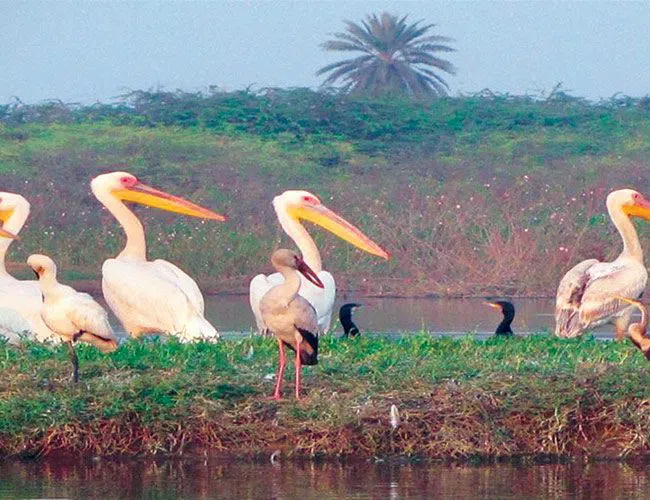
Sur Sarovar (Keetham Lake) Bird Sanctuary sits alongside, which makes the pairing obvious, and I would only make it in winter. From November to February the migratory birds are in and two hours there is time well spent; outside that window it is thin, and a hot, birdless lake is not a thing to do with children. Entry is ₹350 foreign, ₹30 Indian, plus a small vehicle charge at the gate, open roughly 6am to 5pm. Groups are fine.
A half day west at Fatehpur Sikri
Fatehpur Sikri (40 kilometres west) is a half-day commitment and worth it for one thing children respond to immediately: a courtyard the emperor used as a life-size board game, with the squares still in the paving. The site is spread out and never feels compressed, so nobody is being funnelled anywhere. Entry is ₹610 foreign, ₹50 Indian, under-15s free. It is closed on Fridays, same as the Taj, which is worth double-checking against your dates.
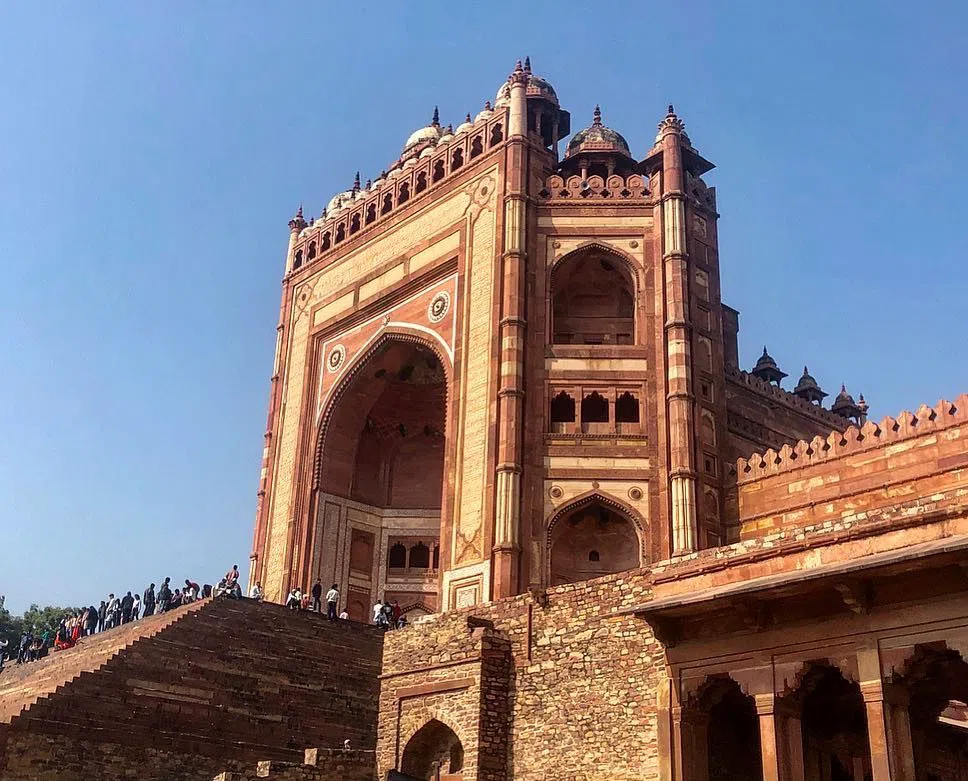
Two pieces of door advice. First, arrange your guide in advance; the car park attracts persistent unofficial guides and fending them off with children in tow is wearing. Second, skip the shuttle link from the car park and use a private car as far as you are permitted to drive. The shuttle wait is where tempers go, and it comes at the end of a forty-kilometre drive when everyone is already at their limit. Leave at eight, be back by early afternoon, and write the rest of that day off for a pool.
A kilometre on foot in Kachhpura
The Mughal Heritage Walk (Kachhpura, on the opposite bank) gets you away from a day of ticket queues. It is one kilometre, flat, two to three hours at the outside, through a village and past lesser Mughal structures, and it finishes near Mehtab Bagh, which is where you want to be at sunset anyway.
It is a community scheme set up by CURE India, with trained village youth guiding under the Heritage Footprints programme, so the money stays in Kachhpura. Child pricing is explicit, which is rarer than it should be: around ₹1,250 per adult and ₹750 per child under 13 booked locally. Agency-packaged versions run from about US$45 a head, which buys you a booking form and not much else. Families and small groups are welcome, and the pace is set by walking rather than by a queue.
Feeding a table with one fussy eater in it
Pinch of Spice (branches in Civil Lines and Tajganj) is the dependable full-service dinner: familiar Mughlai and North Indian cooking, reliable kitchen hygiene, portions built for sharing, which is how you feed a table when one child will only eat plain bread. Budget around ₹1,500 for two. It takes big tables but books out at weekends, so reserve whichever branch is nearer your hotel.
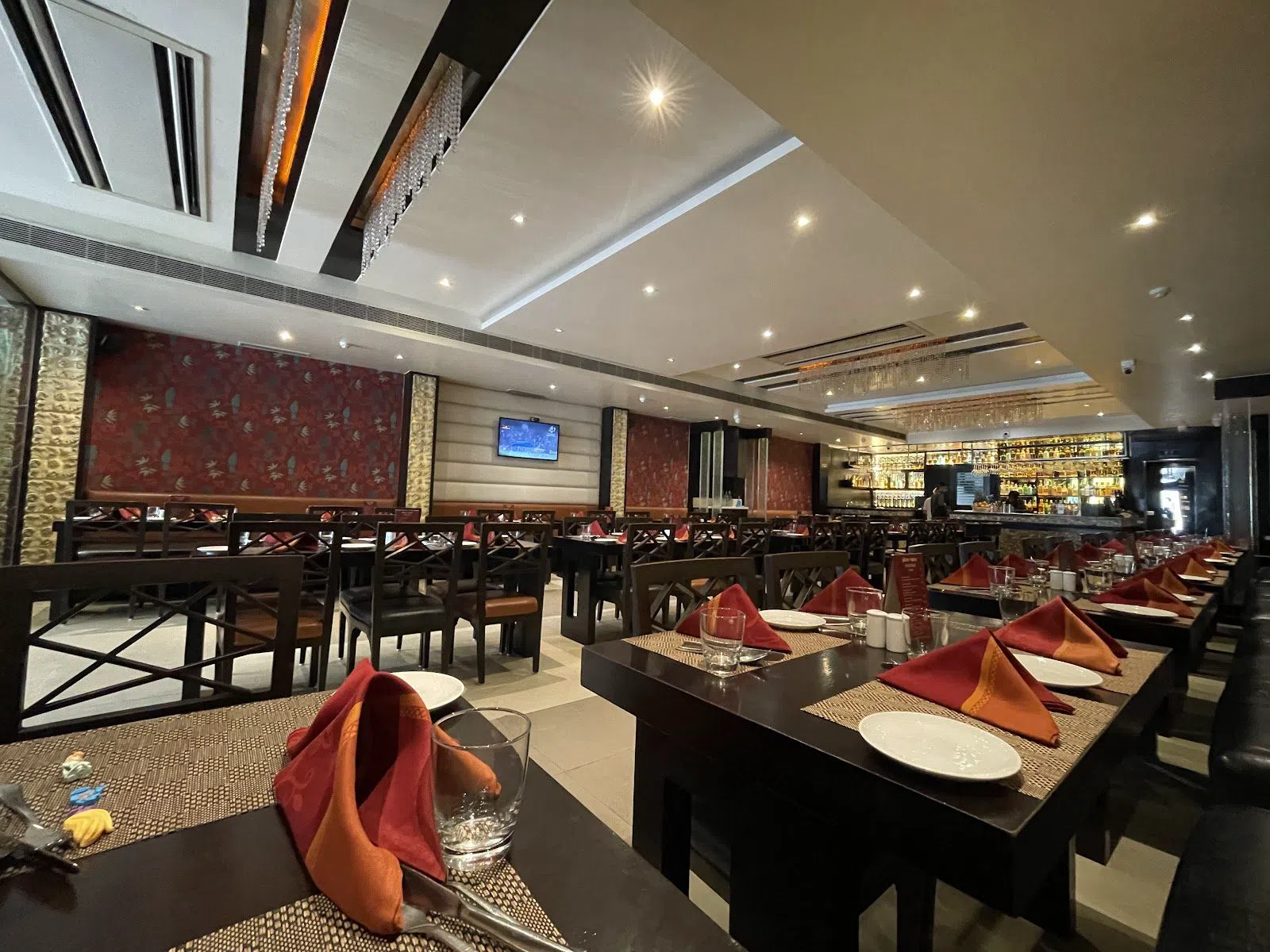
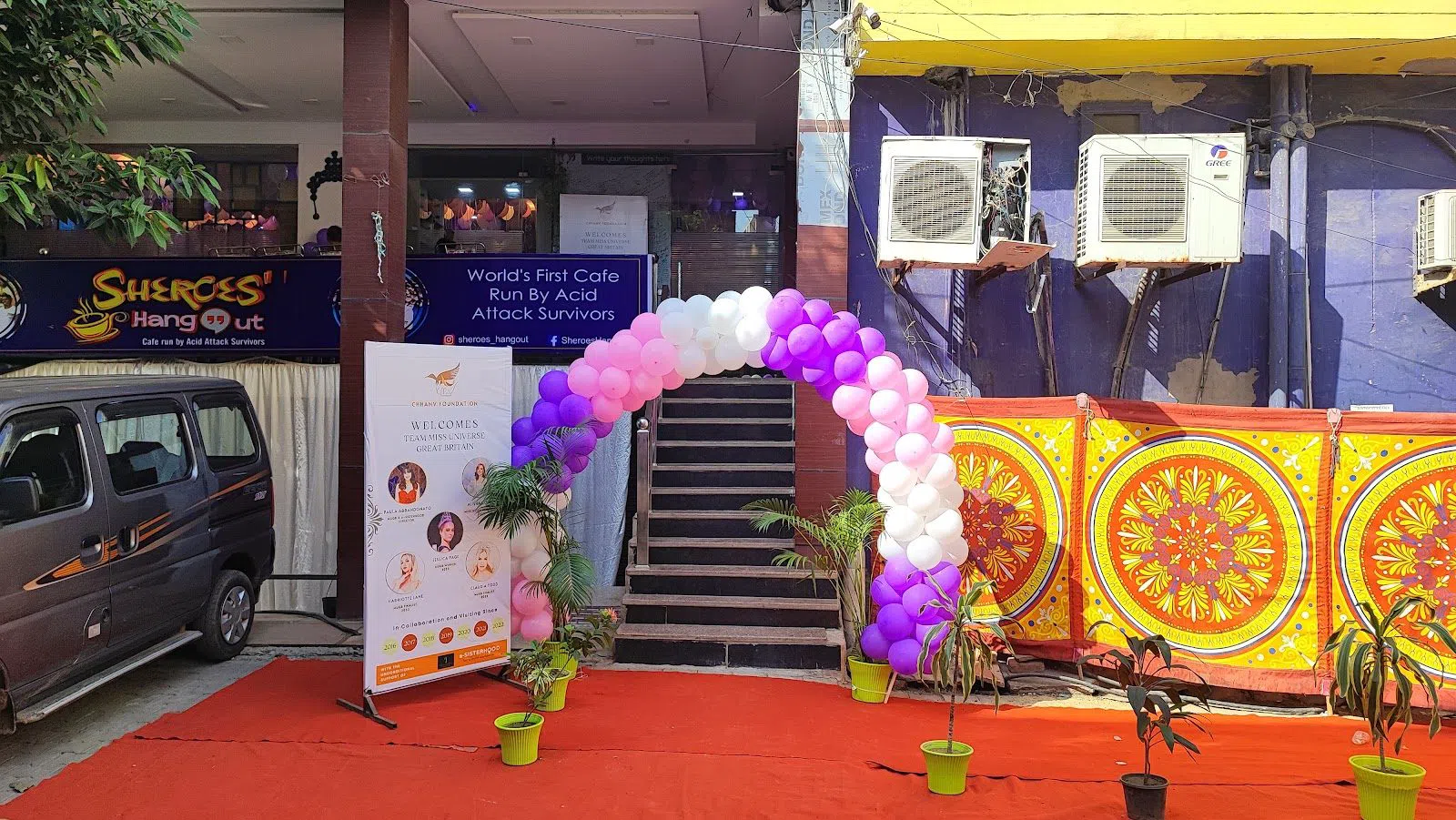
Sheroes Hangout (Taj View Chowraha, Fatehabad Road) is a walk-in café run by the Chhanv Foundation and staffed entirely by acid attack survivors, open 9am to 9pm. Prices have been fixed since 2020 and profits fund surgeries and legal aid. Come for the reason rather than the menu, which is basic: tea, snacks, simple mains. Have a word with older children beforehand about what they will see, because it lands far better as a prepared conversation than as a surprise, and the staff are happy to talk to visitors who arrive ready to listen. With very young children who cannot yet be prepared, it is reasonable to leave this one for a later trip.
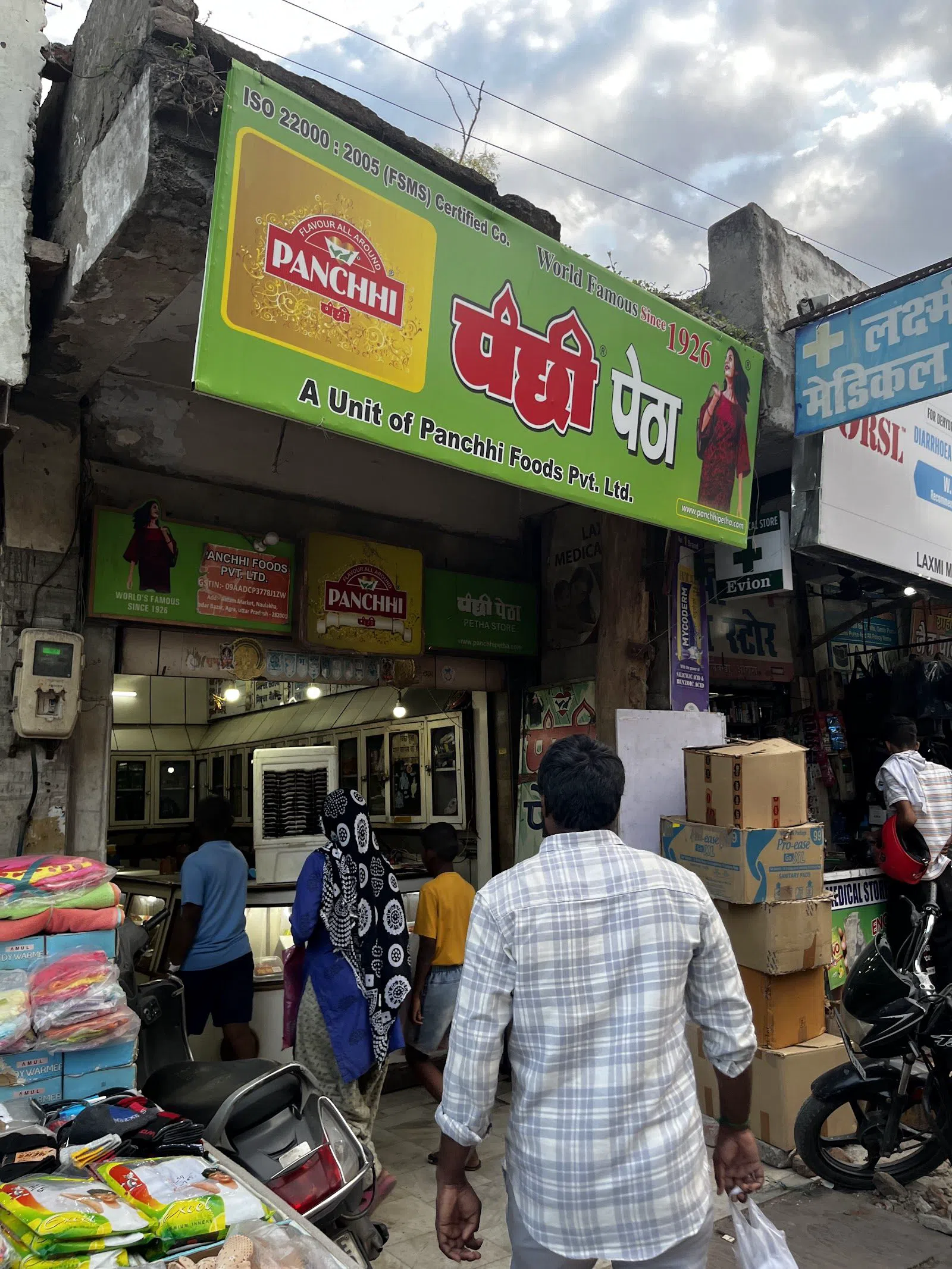
Panchhi Petha (Sadar Bazaar, at the Naulakha crossing) is the original branch, and naming it precisely matters because dozens of imitators around the city trade on the name. Petha, the translucent ash-gourd sweet Agra is known for, is the souvenir a child will actually want, it costs a few hundred rupees per kilo boxed, and it survives a flight home. Counter service only, no seating; you queue, and at weekends you queue for a while.
When the heat wins, go indoors
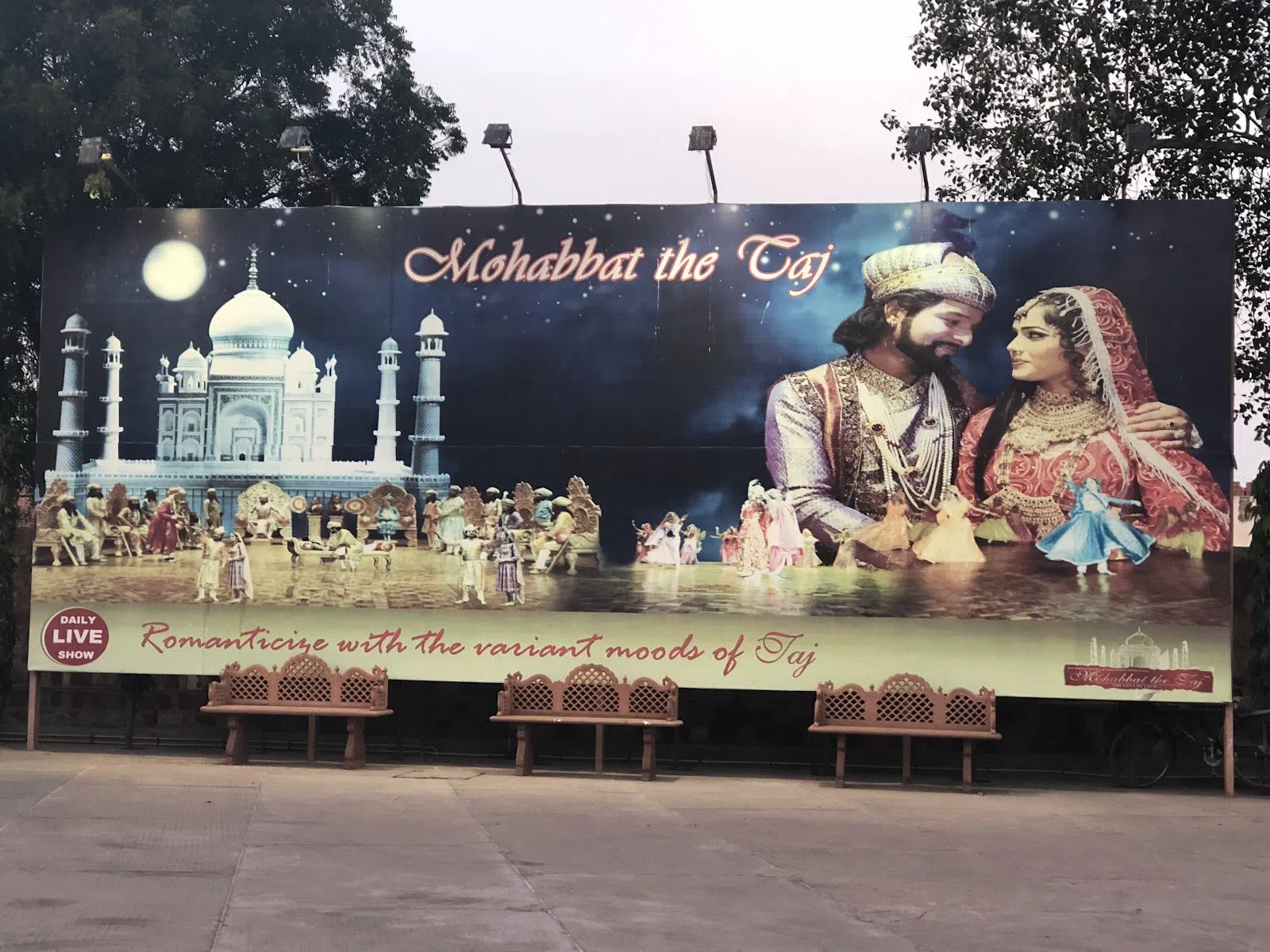
Kalakriti Cultural & Convention Centre (Fatehabad Road) is the right shape for the end of a hot sightseeing day: indoors, air-conditioned, sit-down, 45 to 70 minutes, with live music and a Taj Mahal that rises on stage. Seating is tiered from Silver to Maharaja, roughly ₹800 to ₹2,500 a seat, and headsets carry translation in around ten languages, so nobody is lost. There is one evening performance. Confirm the start time when you book, because both an early-evening and a 7.30pm slot are quoted depending on the season.
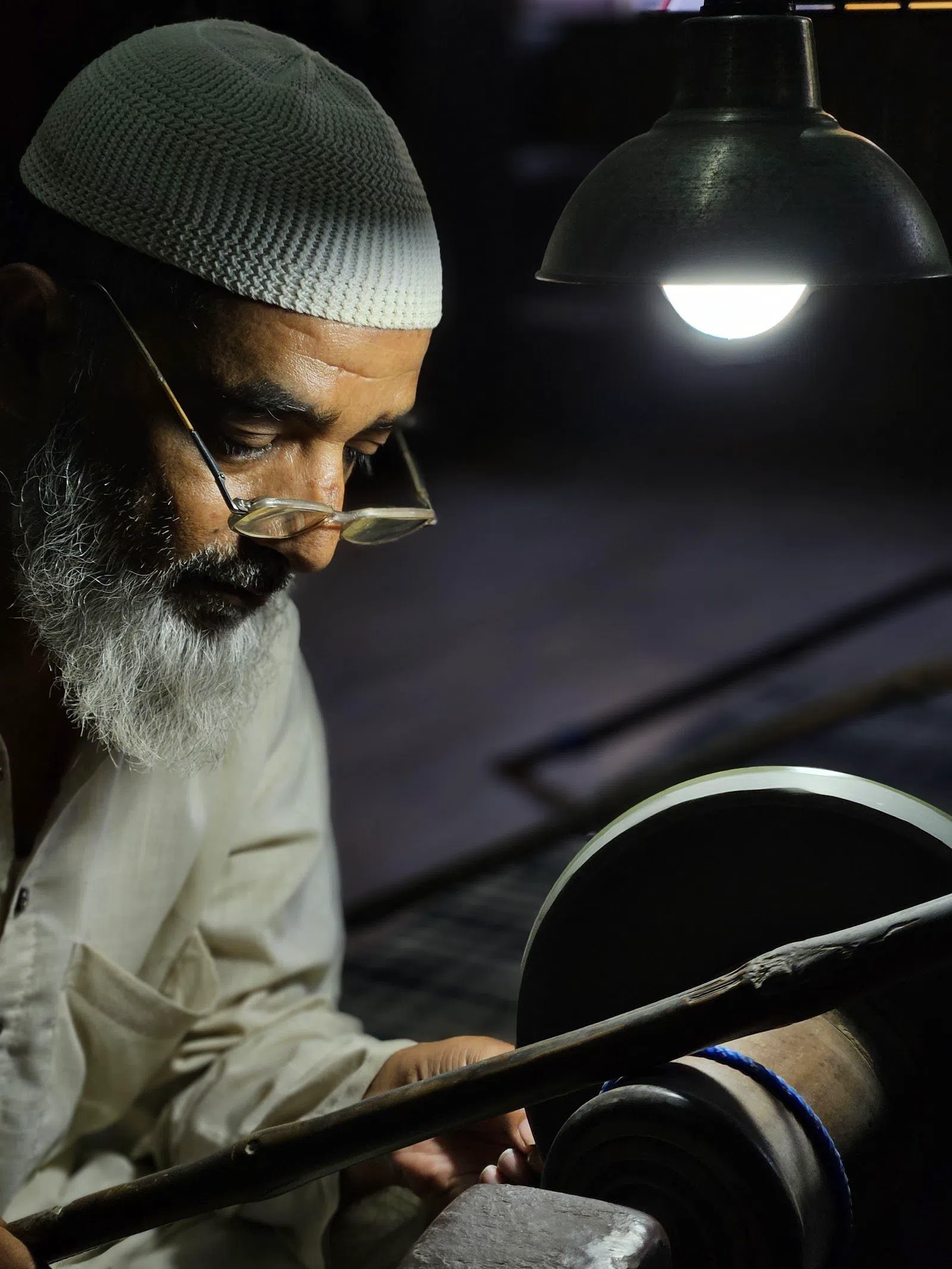
Subhash Emporium (Gwalior Road) has been family-run since 1962 and is one of the few places where the pietra dura demonstration is the actual craft rather than a sales pretext. The demonstration is short, runs on demand and is free to watch, and ten minutes of seeing stone cut and set answers every question a child has had since the Taj. Pieces run from a few thousand rupees to lakhs, and there is no obligation to buy; say so at the door and the staff respect it.
Two days that hold together
Day one: Taj Mahal at opening, breakfast, a long flat middle of the day, Agra Fort at four, dinner at Pinch of Spice. Day two: bears at Keetham on a booked morning slot, the Baby Taj on the way back, Mehtab Bagh for the last of the light, Kalakriti after. If you have a third day, put Fatehpur Sikri on it and nothing else. If your dates land on a Friday, both the Taj and Fatehpur Sikri are shut, so that is the day for the fort, Sikandra, the bear centre and the Kachhpura walk, and it is a perfectly good day. More on the city's wider geography sits in the Agra guide.
Practical notes
Getting around. Hire a car with a driver by the day rather than piecing together autos with children and bags; Sikandra, Keetham and Fatehpur Sikri are all beyond comfortable auto range, and a driver who waits at each gate is what turns a three-monument day into something survivable. Within Tajganj and Fatehabad Road, autos and e-rickshaws are fine for short hops. Vehicles cannot approach the Taj gates directly, so expect a short electric shuttle or a walk at the end.
Cash. Buy ASI monument tickets online by card in advance for every site listed here. Carry small notes for autos, the Sur Sarovar vehicle fee, the Kachhpura walk and the petha counter. The bear centre's donation is best given in cash on the day.
Timing. November to February is the season with children: comfortable daytime temperatures, and the only window where the bird sanctuary earns its ticket. April to June regularly runs past 40°C, which makes the sunrise-then-hide pattern mandatory rather than optional. July to September brings the rain and the crowds thin out; the monuments stay open apart from the usual Friday closures.
Budget. A family of four with two under-15s spends roughly ₹2,600 on Taj entry with the mausoleum supplement, ₹1,300 at the fort, and around ₹1,000 at the bear centre before the donation, so monuments are the smaller line. Reckon on ₹3,000 to ₹4,500 a day for a car and driver, and around ₹1,500 for a full dinner for two. Stay on Fatehabad Road or in Tajganj if you want to walk to the Taj gate at dawn; compare rates and locations with an Agra hotel search before you fix the plan, because a twenty-minute morning taxi is the difference between making the sunrise slot and missing it.
Before you go
Do children need a Taj Mahal ticket if they get in free?
Yes. Under-15s enter free at 2026 ASI rates, but each child still needs a ticket issued in their name, so put every name on the online booking the night before, including a baby in arms. Adults pay ₹1,100 (foreign) or ₹50 (Indian) plus a ₹200 supplement to enter the mausoleum chamber, which you can skip with small children.
How many days do you need in Agra with children?
Two is enough for the Taj Mahal, Agra Fort, the Baby Taj, Mehtab Bagh and the bear rescue centre, provided you build in a long empty middle of the day. Add a third day only if you want Fatehpur Sikri, which is a half-day drive-and-walk on its own and does not combine well with anything else.
What can you do in Agra on a Friday?
Both the Taj Mahal and Fatehpur Sikri close on Fridays. Agra Fort, the Tomb of I'timad-ud-Daulah, Mehtab Bagh, Akbar's Tomb at Sikandra, the Wildlife SOS bear centre and the Mughal Heritage Walk all run as normal, which makes for a full and less crowded day.
Do you have to book the Wildlife SOS bear rescue centre in advance?
Yes, and days ahead rather than the morning of. There are only three or four guided slots a day, booking is by email or phone, and walk-ups are turned away at the gate. Say how many of you there are when you book, and ask about the charity's elephant centre in the same message.
When is the best time of year to visit Agra with young children?
November to February. Daytime temperatures are manageable for long walks between gates and monuments, and it is the only window when Sur Sarovar's migratory birds make that ticket worth buying. April to June regularly passes 40°C, which makes the sunrise-then-rest pattern essential.